

What is Osgood-Schlatter disease?
The strongest muscle in the human body, the quadriceps femoris, extends the lower leg at the knee. It originates from several attachment points on the pelvis and attaches via a common tendon to the upper edge of the patella (kneecap). From there, through the patella and then the patellar ligament, the quadriceps transfers its force to the shin bone (tibia), specifically to a bony prominence on its front surface called the tibial tuberosity. In other words, the entire knee extensor mechanism attaches below the knee at the tibial tuberosity. In children whose knees are exposed to repeated stretching and pulling of the patellar ligament attachment on the tibial tuberosity, avascular necrosis and aseptic inflammation can develop. When mechanical traction causing microtrauma to the still-cartilaginous apophysis of the tibial tuberosity leads to significant pain and sometimes swelling, the child has Osgood-Schlatter disease. Osgood-Schlatter disease occurs during the adolescent growth spurt, so it is more common in adolescents, particularly boys. In fact, Osgood-Schlatter disease may be the most common reason adolescents visit a paediatric orthopaedic specialist for knee problems. The pain usually affects both knees, though often to different degrees.
How is Osgood-Schlatter disease diagnosed?
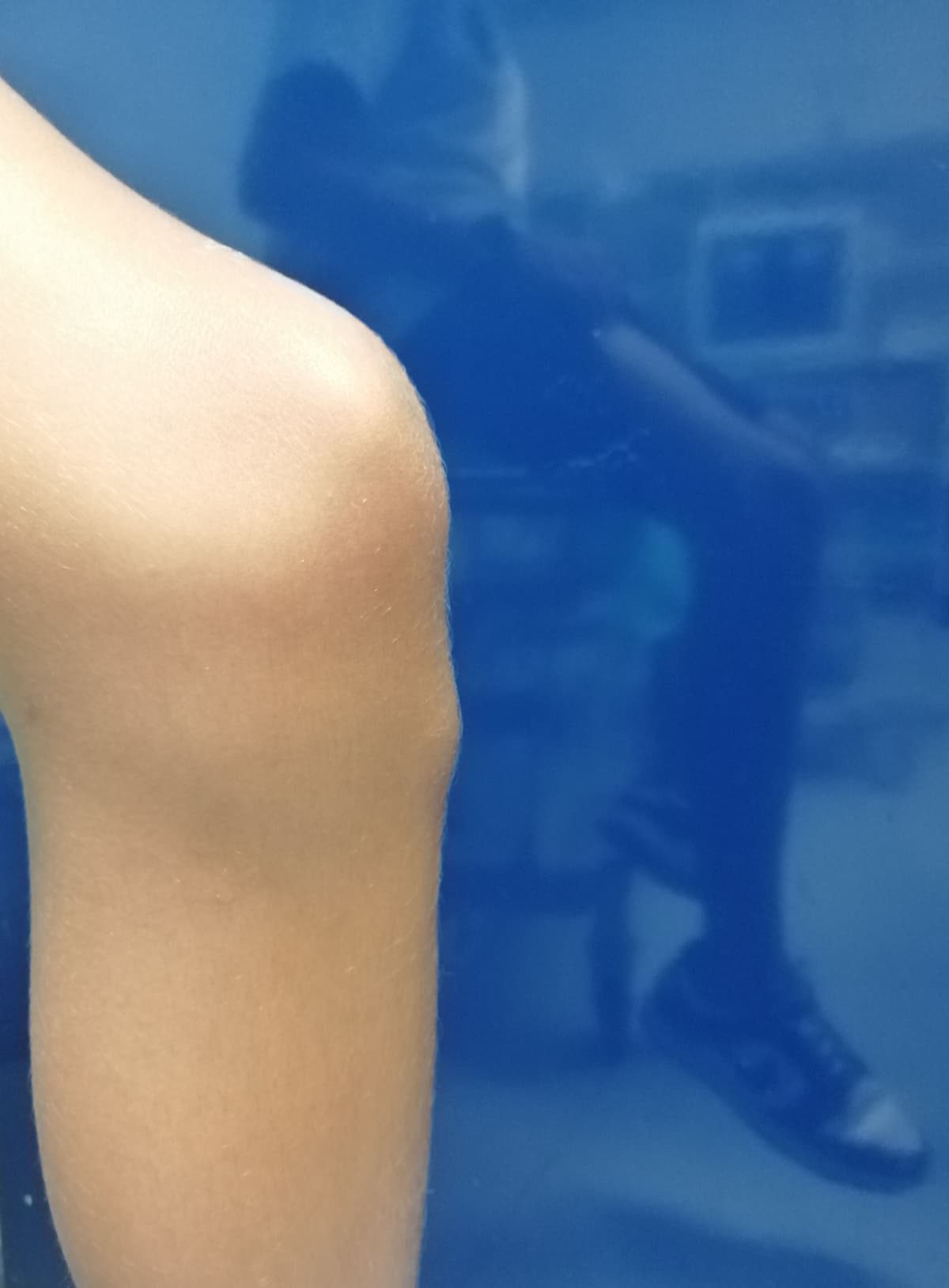
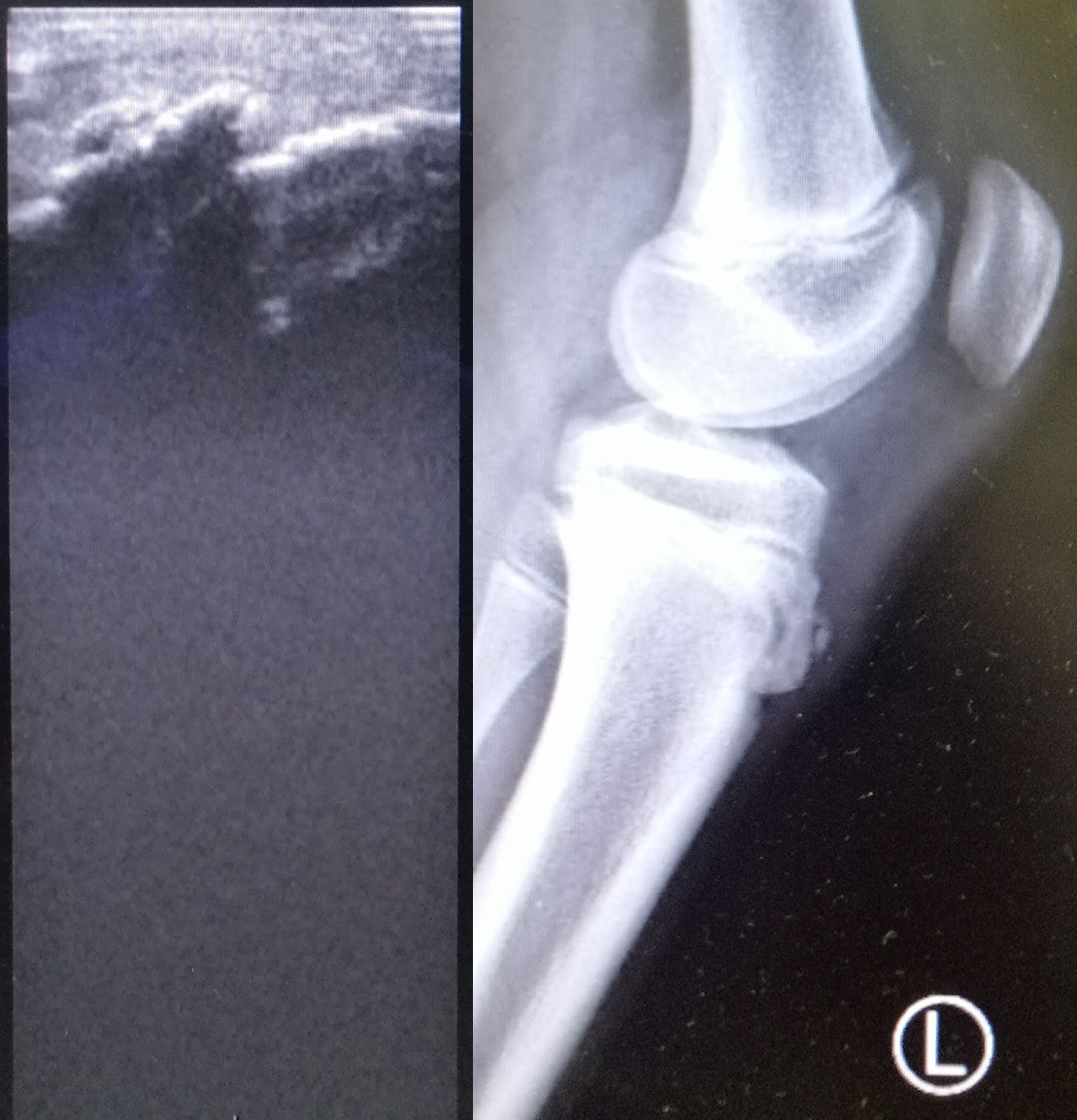
With Osgood-Schlatter disease, children complain of pain at the front of the knee and often describe a swelling or bump on the knee, image 1. They usually do not recall any significant injury, but the pain is more pronounced after sports activities. On clinical examination, thickening and swelling can be seen, and palpation always elicits marked tenderness over the tibial tuberosity. Sometimes children complain of pain when kneeling, which should raise suspicion of a so-called ossicle (small bone fragment) associated with Osgood-Schlatter disease. In that case, a knee ultrasound or a lateral knee X-ray should be performed to confirm the ossicle, image 2. An ossicle forms when, at an earlier stage, a small part of the patellar ligament attachment fragmented, was pulled away, and gradually ossified.
How is Osgood-Schlatter disease treated?
Treatment of Osgood-Schlatter disease is conservative, using physical therapy. The child’s sports activities should always be modified, jumping should be limited, and stretching of the thigh muscles, which are usually shortened, should begin. Muscle stretching should be persistent, and it is also helpful to add stretching of the muscle fascia with a foam roller. During the very painful phase, cryotherapy with ice massage is helpful, while pain medication is not recommended. Osgood-Schlatter disease usually resolves with physical therapy. In children with an ossicle, surgery is sometimes required. However, in some children, jumping activities can cause a fracture – an avulsion of the tibial tuberosity – where the strong patellar ligament tears away a piece of the young bone at its attachment; in that case, surgery is always the treatment of choice.
For more information or to schedule an appointment, please get in touch via the contact form.
Book Appointment