
What is an ankle sprain?
An ankle sprain is one of the most common injuries that can happen to an athlete, a recreational sportsperson, or anyone who missteps on uneven ground. It usually involves stretching or tearing of one or more of the ligaments that stabilise the ankle, due to excessive force acting on the joint.
According to the mechanism of injury, we distinguish:
- Inversion injury – the foot turns inward, causing injury to the ligaments on the outer (lateral) side of the ankle – this is the most common type of injury
- Eversion injury – the foot turns outward, causing injury to the deltoid ligament on the inner side of the ankle. Because of its strength, this mechanism is less common, but it often requires more detailed diagnostic work-up
What are the grades of an ankle sprain and how are they recognised?
Depending on the extent of ligament damage, an ankle sprain is divided into three grades:
- Grade one – characterised by stretching of the ligaments without tearing, with mild swelling and pain; walking is generally still possible with slight discomfort
- Grade two – a partial tear of the ligament occurs, pain and swelling are more pronounced, bruising often appears, and putting weight on the injured leg is difficult
- Grade three – a complete tear of one or more ligaments, with swelling, bruising and a feeling of ankle instability; walking is usually very painful or not possible at all
What should be done after an ankle sprain?
Immediately after the injury, it is important to reduce the load on the injured ankle and apply the POLICE principle, a modern approach to managing acute soft-tissue injuries.
- Protection – avoiding all activities that cause pain during the first few days after the injury
- Optimal Loading – light loading instead of complete immobilisation
- Ice – applying ice to the injured area in intervals of 10–15 minutes
- Compression – applying an elastic bandage to prevent additional fluid build-up
- Elevation – raising the leg above the level of the heart to reduce swelling
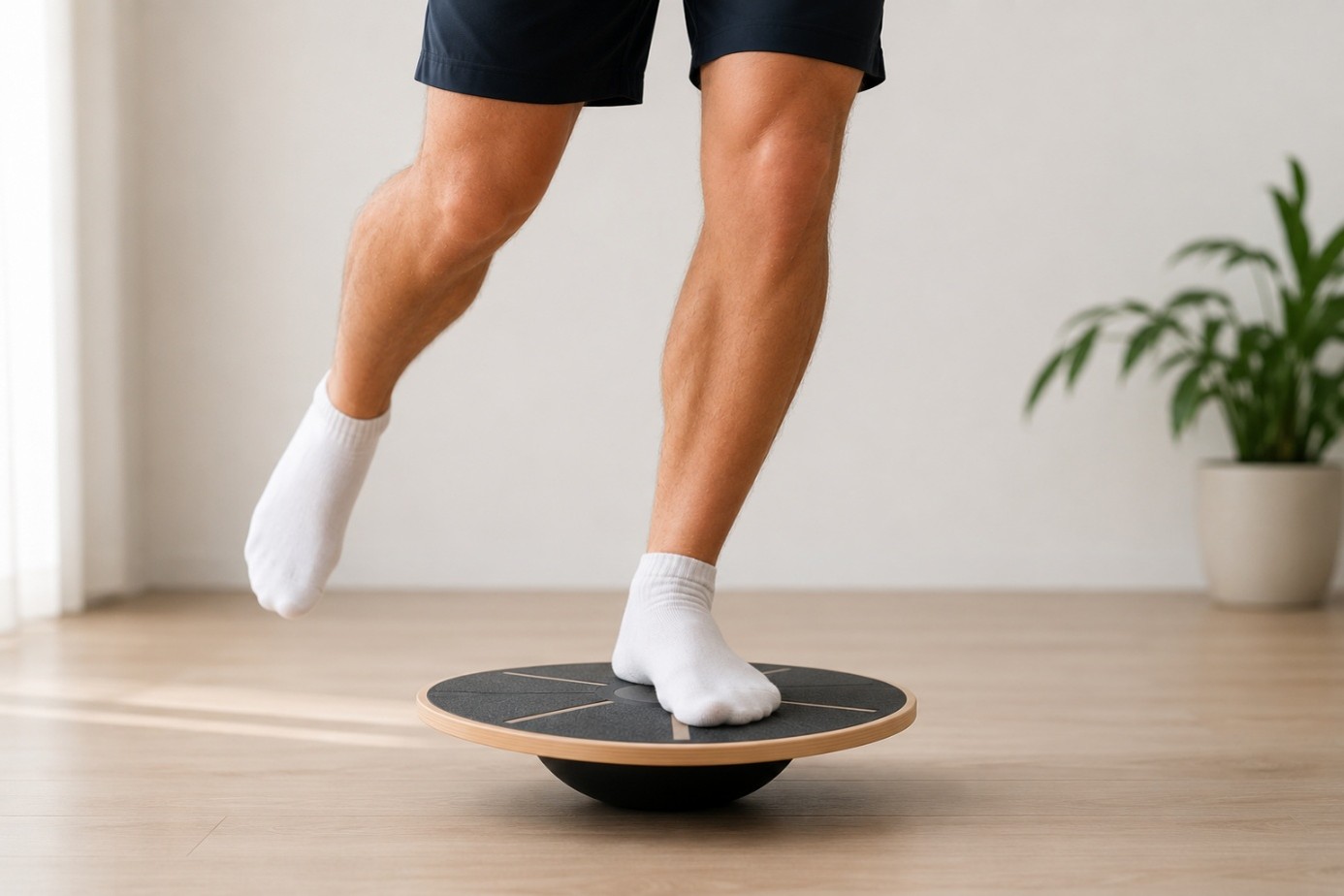
After initial care, physical therapy plays a key role in rehabilitation. Methods such as laser, ultrasound, magnetic field and TECAR therapy are used to reduce pain and speed up tissue healing. Besides reducing pain and swelling, the goal is to restore full range of motion, muscle strength, proprioception and dynamic stability of the ankle, in order to lower the risk of re-injury. The rehabilitation programme is adapted to the grade of the injury and offers an individualised approach to each patient.
When can full recovery from an ankle sprain be expected?
Recovery time depends on the grade of the injury, the patient's age, and adherence to the rehabilitation programme. For milder sprains, recovery is usually expected within 2 to 4 weeks, while for partial ligament tears rehabilitation takes around 6 to 8 weeks. Complete ligament tears can require several months of recovery, especially in people planning to return to sports activities. A return to everyday or sports activities is recommended only once full range of motion, muscle strength, and ankle balance and stability have been restored. Returning too early increases the risk of re-injury and the development of chronic ankle instability.
For more information or to schedule an appointment, please get in touch via the contact form.
Book Appointment