
What is the anterior cruciate ligament?
The anterior cruciate ligament (ACL) sits in the middle of the knee joint, in a bony notch at the lower end of the femur, from where it runs diagonally down to the upper end of the tibia. If we think of the knee as a coordinated system that provides a stable, free range of motion, the ACL should be seen as the most important component of that system. Its main role is to prevent the tibia from shifting too far forward relative to the femur and to provide good rotational stability of the knee. Most people feel instability – a sense of the knee “giving way” – after an ACL tear. Because of their lifestyle and the everyday activities typical of their age, children are frequently exposed to sudden changes of direction, so after an ACL tear they feel as if the knee is “giving way or wobbling”. Since children are not simply small adults, ACL injuries in children and adolescents have their own particular features that need to be taken into account.
ACL injuries in children
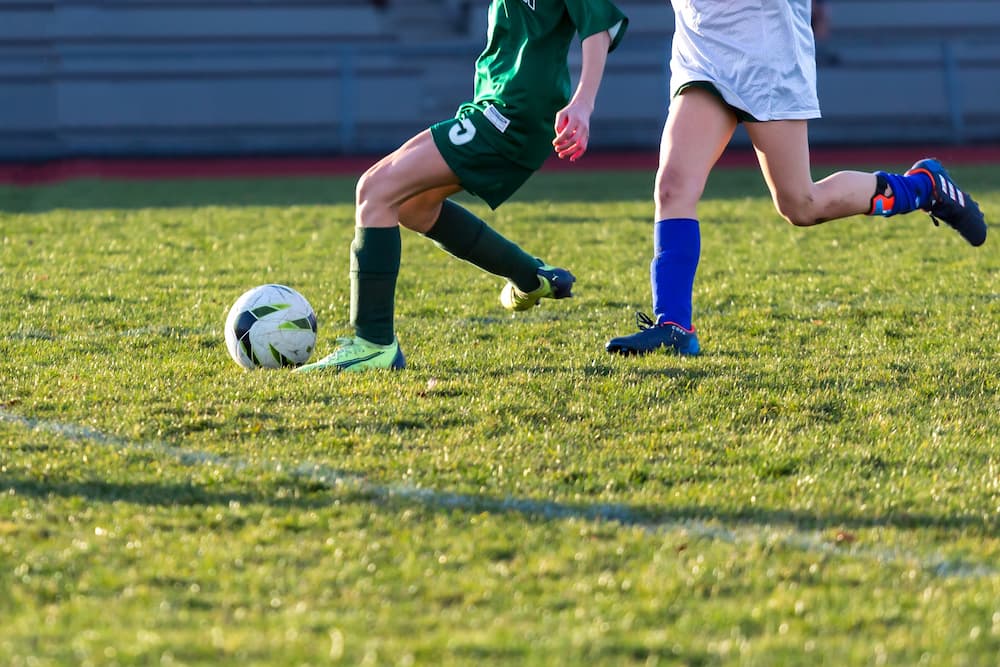
Over the last twenty years or so, the number of ACL injuries in children has increased many times over. This is believed to be due to early, highly specialised and intensive sporting activity – meaning children specialise in a single sport early in life and train intensively, while injury-prevention programmes are not implemented. Another likely reason for the rise in knee injuries in children is the decline of unstructured children's play around the house, in the playground, on the street or in the park. Girls are more prone to ACL tears for several reasons: greater ligament laxity, a thinner ACL, characteristic knee geometry, and hormonal factors. An ACL tear most often occurs as a non-contact knee injury, caused by combined lateral and rotational forces acting on the knee in sports with frequent changes of direction, such as football, handball or basketball.
How is an ACL tear diagnosed in children?
When examined by a paediatric orthopaedic specialist after an ACL tear, children typically describe a characteristic event during a sporting activity – “my knee popped out and came back”. The injury usually happens with a sudden change of direction or on landing from a jump. Children often feel something tear in the knee at the moment of injury, and some even hear it. They describe severe pain, swelling, and an inability to continue the sporting activity. Most children go to the emergency department after a knee injury, where an initial examination and two-view X-rays are performed. On clinical examination, the knee is usually found to be swollen – filled with blood – unable to fully straighten, and the child limps when walking. X-rays show the bones and cannot demonstrate an ACL tear itself. However, in children the ACL sometimes doesn't tear but instead “pulls off” a fragment of the tibial bone to which it attaches, which can then be seen on X-ray. This injury is actually a fracture – an avulsion of the tibial intercondylar eminence – and often requires urgent surgical treatment. Far more often than an intercondylar eminence avulsion, children have a tear of the ACL itself. In the acute phase it is difficult to demonstrate knee instability on clinical examination, because the knee is painful, swollen and the muscles are tense, so if there are no bony injuries on X-ray it is best to re-examine such a knee after a week. Until the next examination, an elastic bandage and cold compresses on the knee are recommended, along with pain medication if needed and exercises to regain full range of motion in the knee. At the follow-up appointment the knee is usually more relaxed, allowing specific clinical tests for instability and meniscus injury to be performed. When carrying out these clinical tests, the other – healthy – knee should always be examined as well for comparison. Although clinical tests can establish a very high probability of an ACL tear, children are sent for an MRI scan for final confirmation. The knee MRI is used to look for other injuries that occur alongside an ACL tear, most commonly meniscus injuries. The MRI is also analysed to determine the exact location of the ACL tear, since certain types of ACL tear are suitable for acute surgical repair. Other more common knee injuries that cause swelling – bleeding into the joint – are meniscus tears and patella dislocation.
How is an ACL tear treated in children?
Children with an ACL tear are considered to have knee instability that shows up during everyday activities, and therefore, over time, to be at excessive risk of further cartilage and meniscus injury. For this reason, the prevailing view today is that every child should be given appropriate knee stability, which is achieved through surgery. An acute, confirmed ACL tear in children can also be treated conservatively, without surgery, in cases of a partial ACL tear. In that case, the knee is placed in a long knee brace at 10° of flexion for 5 weeks. After this treatment, intensive physical therapy is needed, with exercises to strengthen the thigh muscles in order to achieve the best possible knee stability. Furthermore, an acute, confirmed complete ACL tear at its attachment point alone can be treated arthroscopically, using a primary repair technique that sutures the ACL back to its anatomical attachment. Today, however, the most common surgical treatment for an ACL tear is arthroscopic ACL reconstruction. Tendons taken from the same knee being operated on are most often used as the graft to reconstruct – replace – the ACL. Because reconstructing the ACL involves drilling through the bones of the knee, it is extremely important in children to correctly assess skeletal maturity and choose an appropriate surgical technique. Growth in leg length from the growth plates around the knee accounts for roughly 70% of total leg length, so it is very important during surgery to be as protective as possible of the growth plates. At the same time as ACL reconstruction, meniscus repair is performed if the meniscus is torn. Recently, ACL reconstruction has also increasingly been combined with reinforcement of the knee's lateral ligaments to achieve better rotational stability. After surgery, children go through specific physical therapy protocols that always aim first for a full range of motion, followed by strengthening of the thigh muscles – particularly the hamstrings. This is followed by a return to everyday activities and, finally, a full return to sporting activities after one year.
For more information or to schedule an appointment, please get in touch via the contact form.
Book Appointment